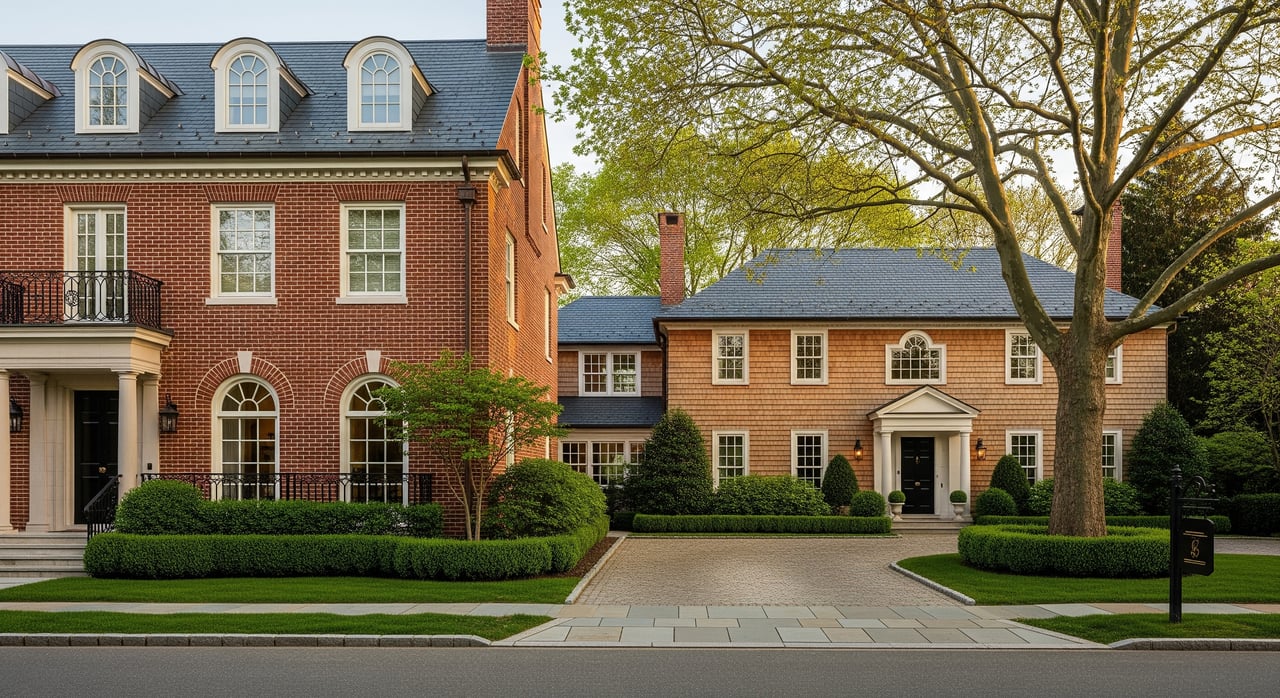
Trying to choose between a low‑maintenance townhouse near the train and a classic Greenwich house with a yard? You’re not alone. With a mix of attached homes near downtown and larger single‑family lots across town, the best fit comes down to how you live day to day. In this guide, you’ll compare ownership, costs, lifestyle, commute, and resale in Greenwich so you can buy with confidence. Let’s dive in.
Greenwich market snapshot
Greenwich is a suburban market in Fairfield County with several distinct areas, including Downtown/Greenwich Avenue, Cos Cob, Riverside, Old Greenwich, Byram, Belle Haven, and Backcountry. Single‑family homes dominate land use and listings, while townhouses and condos make up a smaller share clustered near transit and shopping. For current pricing, inventory, and days on market by property type, review the up‑to‑date data on the Redfin Greenwich market center and the Zillow Greenwich overview.
If you are early in your search, use these sources to track monthly changes in median price and supply. Small shifts in inventory can influence whether a townhouse or single‑family home offers better value in your target neighborhood.
What you own and maintain
Single‑family homes
- Ownership: Fee simple title to the land and structure.
- Maintenance: You are responsible for exterior upkeep, roofing, siding, landscaping, driveway, and all systems.
- Flexibility: Additions and accessory structures may be possible with permits and zoning review.
Townhouses and condos
- Ownership: You typically own the interior of your unit and share common elements through a condo association or HOA.
- Maintenance: The HOA usually covers building exterior, roof, landscaping, and shared areas, funded by monthly dues.
- Rules: Changes to exteriors and common areas require association approval; review CC&Rs and bylaws.
Where each fits in Greenwich
- Downtown/Greenwich Avenue: Higher concentration of townhomes and condos with strong walkability to shops and the train.
- Cos Cob and Riverside: Mix of single‑family homes with smaller townhouse communities near stations; some waterfront areas involve flood considerations.
- Old Greenwich: Village feel with both single‑family homes and select townhome options; coastal exposure is part of the landscape.
- Belle Haven and Backcountry: Primarily single‑family estates on larger lots with limited attached product.
- Byram and northern areas: More varied single‑family inventory and fewer townhome developments.
Cost factors to compare
Purchase price and taxes
On average, single‑family homes trade higher than townhouses because of land value and lot size. To compare today’s medians for each type, check the Redfin Greenwich market center.
Greenwich property taxes are based on assessed value and the town mill rate. You can find assessment details on the Greenwich Assessor page and billing policies on the Tax Collector page. Reviewing recent tax bills for specific addresses is a smart apples‑to‑apples step.
HOA dues vs. private upkeep
- Townhouses/condos: Monthly HOA dues typically fund exterior maintenance, landscaping, snow removal, and insurance on the building shell. Some include heat or water. Dues vary by complex, amenities, and reserve funding.
- Single‑family homes: No HOA dues in most cases, but you carry the full cost of landscaping, snow removal, exterior repairs, and utilities. A maintenance budget is essential.
Insurance and flood risk
Coastal neighborhoods like Old Greenwich and Riverside include areas mapped in Special Flood Hazard Areas. If a property sits in a flood zone, lenders may require flood insurance. Use the FEMA Flood Map Service Center to check a specific address and consult Connecticut resources through CT DEEP for coastal and floodplain guidance.
Utilities and operating costs
Townhouses may have shared utilities or common services bundled into HOA dues. Single‑family homes typically meter everything individually. Ask for 12 months of utility history where possible to compare.
Financing and condo approval
Mortgages for both property types often use conventional products. For condos and townhouse regimes, lenders review the building’s budget, reserves, insurance, owner‑occupancy, and any litigation. Action step: ask your lender early about condo project eligibility and documentation needs so your financing timeline stays on track.
Lifestyle and commute
Transit access
Greenwich is served by multiple Metro‑North New Haven Line stations, including Greenwich, Cos Cob, Riverside, and Old Greenwich. Townhouses near stations usually offer shorter walks and predictable commute times. Review schedules and service updates on the MTA/Metro‑North site.
Walkability and amenities
Townhouses clustered around Downtown/Greenwich Avenue and Cos Cob often place you close to coffee shops, restaurants, and errands. Many single‑family neighborhoods trade that walkability for larger lots, more parking, and private outdoor space.
Yard, parking, and privacy
If you want a garden, play area, pool, or room for an addition, a single‑family home provides more flexibility. Townhomes typically offer limited private outdoor space and shared walls, so factor in noise and privacy preferences.
Resale and investment lens
- Buyer pool: Single‑family homes in good locations generally draw a broader audience. Townhouses attract downsizers, commuters, and buyers seeking lower maintenance and a more attainable entry price.
- Appreciation drivers: Land scarcity, strong schools, and proximity to Manhattan support long‑term value for well‑located single‑family homes. Townhome values depend heavily on location, HOA health, and upkeep of the complex.
- Risks to watch: Review HOA reserve levels, upcoming capital projects, and any pending litigation. In coastal areas, confirm flood zone status, insurance costs, and any elevation or mitigation requirements.
Quick decision guide
Choose a townhouse if you want:
- Low exterior maintenance and predictable monthly costs.
- Proximity to train stations, shops, and restaurants.
- A smaller footprint with modern systems or amenities.
- A potentially lower price point to enter Greenwich.
Choose a single‑family home if you want:
- A private yard, room for additions, or a pool.
- Maximum control over design and maintenance.
- More parking and storage in driveways and garages.
- Stronger privacy and separation from neighbors.
Your next steps
- Get current numbers. Check medians, inventory, and days on market by property type on Redfin and Zillow.
- Verify taxes. Pull the assessed value and mill rate via the Assessor and Tax Collector, then review recent tax bills.
- Confirm flood status. Use the FEMA Flood Map Service Center for any Riverside, Old Greenwich, or near‑water address.
- Map your commute. Review station options and train schedules on the MTA/Metro‑North site.
- Review rules and permits. Visit the Town portal for zoning and building guidance at the Greenwich main site, and confirm any HOA restrictions.
- If schools matter. Verify attendance boundaries and programs on the Greenwich Public Schools site.
Documents to request when you get serious:
- For townhouses/condos: HOA budget, reserve study, insurance certificate, meeting minutes, and resale certificate.
- For any home: recent tax bill, utility history, property condition disclosures, permit history, and a flood zone certification where applicable.
Ready to compare live options and costs in your preferred neighborhoods? Connect with a senior‑led team that knows Greenwich block by block. Reach out to Sunbelt Sales & Development Corp. to see curated listings and plan your next steps. Schedule a tour. Call or text Juan Carlos today.
FAQs
Affordability in Greenwich: townhouse vs. single‑family
- Townhouses generally offer a lower entry price than single‑family homes; confirm current medians by property type on the Redfin Greenwich market page.
HOA fees for Greenwich townhouses: what to expect
- Dues typically cover exterior maintenance, landscaping, snow removal, and building insurance; review the HOA budget and reserves to understand coverage and future needs.
Financing a Greenwich condo or townhouse: will it limit options
- Conventional financing is common, but lenders review the project’s budget, reserves, occupancy, and litigation; ask your lender about condo eligibility requirements early.
Property taxes in Greenwich: how they are set
- Taxes are based on assessed value and the mill rate; verify details and recent bills through the Assessor and Tax Collector.
Flood zones in Greenwich: are townhouses affected
- Flood risk depends on location; check any specific property, especially in Riverside and Old Greenwich, on the FEMA Flood Map Service Center.
Commute from Greenwich to Grand Central: what to know
- Multiple stations serve Greenwich with express and local service; confirm departure options and travel times on the MTA/Metro‑North site.
Resale in Greenwich: which type typically sells faster
- Well‑located single‑family homes often draw broader demand, while well‑maintained townhouses near transit can sell quickly to commuters and downsizers.
Parking and pets in Greenwich townhouses: what to check
- Review HOA rules for assigned parking, guest spaces, and any pet restrictions before you make an offer.
