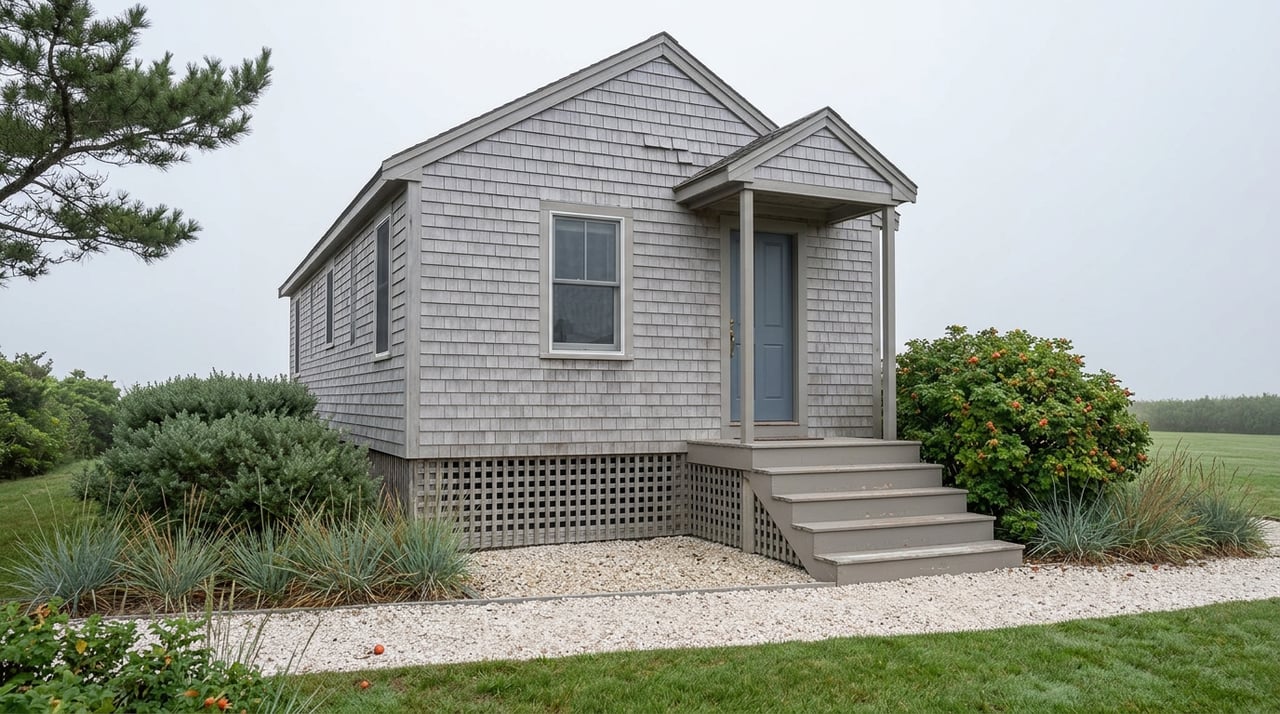
Two buyers walk into the same price range this month, one looking at a shingle-style cottage near the water in Rowayton, the other at a comparable-sized colonial a few miles inland in Cranbury. The listing agents talk lot size, square footage, school pickup routes. Nobody mentions the number that shows up three weeks later at underwriting: the flood insurance quote. That number can differ by thousands of dollars a year between two houses that look nearly identical on paper, and it has almost nothing to do with which side of Norwalk they sit on.
That is the piece of the Norwalk market that gets flattened every time someone quotes a single median price for the city. Depending on which aggregator and which month you check in 2026, Norwalk's citywide median has been reported anywhere from the mid $600,000s to the mid $700,000s. The spread itself tells you something: a citywide median is doing a lot of averaging across a place that Norwalk brokers and residents alike describe as feeling like several towns stitched together, from the loft condos of South Norwalk to the coastal cottages of Rowayton to the traditional single-family streets of Cranbury and West Norwalk. Layer in insurance, and the picture gets more specific, and more useful, than any single median number can be.
The Gap Everyone Explains the Same Way
The price gap between Rowayton and the rest of Norwalk is real and well documented. Rowayton single-family listings carried a median price near $2.49 million as of April 2026, while Silvermine, a more inland but still upscale pocket known for stone walls and its arts history, listed at a median around $1.24 million as of June 2026. Cranbury and West Norwalk sit closer to the city's broader range, with larger lots and mid-century colonials at prices well under either of those figures.
The usual explanation stops at water access, dock rights, and square footage. That explanation is not wrong. It is just incomplete. What it leaves out is that Rowayton is also the part of Norwalk where flood risk is structurally different: First Street Foundation modeling puts roughly 46 percent of Rowayton properties at severe 30-year flood risk, compared with about 18 percent citywide. That risk profile does not show up on the listing sheet. It shows up on the insurance bill, and since 2023 that bill has been calculated in a way most buyers have never encountered before shopping in a coastal Connecticut market.
What Changed in 2023, and Why It Still Matters
For nearly fifty years, FEMA priced flood insurance by zone. If your house sat in a mapped Special Flood Hazard Area, you paid the zone's rate, more or less regardless of where your particular house sat within that zone. That system ended with Risk Rating 2.0, which FEMA fully implemented in April 2023. The new methodology prices each building individually, using its distance to water, its elevation, its foundation type, its flood history, and the cost to rebuild it. Flood zone designation no longer determines the premium on its own.
The practical consequence is one FEMA itself has flagged: two homes on the same street, even two homes that share a property line, can carry meaningfully different premiums once each one's individual elevation and rebuild cost are run through the model. In a neighborhood like Rowayton, where housing stock ranges from older shingle cottages built at grade to newer elevated construction with flood-compliant foundations, that variation is not a rounding error. It is the difference between a manageable annual cost and one that reshapes a buyer's monthly budget.
This is also why an elevation certificate, though no longer required to purchase a policy, still matters. FEMA now estimates a building's first-floor height using its own modeling tools by default. If a property actually sits higher than that estimate, a certified survey can lower the premium, and because FEMA will not raise a rate retroactively if the survey turns out unfavorable, the certificate is a low-downside, potentially high-upside move for anyone under contract on a waterfront-adjacent Norwalk property. It is a cost worth pricing into a purchase and sale negotiation rather than an afterthought handled after closing.
Same County, Different Bill
Here is the part of the story that a citywide median genuinely cannot tell you, and that a Rowayton-versus-Cranbury comparison alone does not either. NFIP policy data reported in late 2025 puts Norwalk's average flood insurance premium at roughly $1,678, based on about 2,089 active policies. Stamford averages closer to $992 across roughly 2,585 policies. Greenwich, the most expensive of the three towns by a wide margin on home prices alone, averages near $1,502 across about 1,673 policies.
That ordering runs opposite to what a buyer comparing home prices alone would expect. Greenwich carries the highest home values of the group by a wide margin, yet Norwalk carries the highest average flood premium. The gap is not really about home values. It reflects the underlying construction era and elevation profile of the housing stock closest to Norwalk's water, much of which predates modern flood-compliant building standards, combined with a coastline and harbor geometry that puts more of the city's housing within meaningful reach of storm surge and coastal flooding. A buyer weighing a waterfront-adjacent purchase in Norwalk against a similar one in a neighboring town should treat the insurance quote as a separate line item worth collecting early, not a formality to confirm after the inspection contingency clears.
The Renovation Trap Nobody Mentions Until It's Too Late
There is a second friction point specific to Norwalk that catches buyers planning to update an older waterfront home. FEMA's national standard allows a homeowner to spend up to 50 percent of a structure's market value on cumulative improvements within a five-year window before triggering a requirement to bring the entire building up to current flood compliance. Norwalk's own flood hazard zoning rules set a stricter local threshold: 25 percent of the structure's assessed value over that same five-year period.
The city tracks this cumulatively, across every project, whether or not each one required a separate zoning permit. A kitchen remodel two years ago and a roof replacement this year both count toward the same five-year total. Once that 25 percent threshold is crossed, the home must be brought into full flood compliance, which can mean elevating the structure, adding flood vents, or using flood-resistant materials below the base flood elevation, before any further work is permitted. For a buyer eyeing an older cottage in Rowayton or along the harbor with plans to renovate in phases, that math is worth running against the assessor's current appraised value before writing an offer, not after a contractor's second invoice pushes past the line.
What This Actually Means If You're Comparing Norwalk Neighborhoods
None of this argues against buying near the water in Norwalk. Coastal access, Norwalk Harbor, and public beaches like Calf Pasture and Shady Beach are part of what makes Rowayton and East Norwalk distinct from inland pockets like Cranbury or Wolfpit. It does argue for pricing the comparison correctly.
A few steps change the outcome of that comparison:
- Request a flood insurance quote for the specific property, not the neighborhood, before the inspection period ends. Risk Rating 2.0 means the house two doors down is not a reliable stand-in.
- Ask whether an elevation certificate exists, or get one, especially on older construction near the water. The cost of the survey is often small next to the potential premium reduction.
- If you are buying with renovation plans, pull the property's assessed value and ask the city's building department how much of the 25 percent cumulative threshold, if any, has already been used by the current owner.
- Compare full carrying cost, not just sale price, when weighing a Rowayton or harbor-adjacent listing against something in Cranbury, Silvermine, or West Norwalk. The insurance line item can close a meaningful part of the price gap in ongoing cost even when it does not close it in purchase price.
Norwalk's three Metro-North stops, South Norwalk, East Norwalk, and the Merritt 7 stop, give the city more commuter rail access than most towns its size on the New Haven Line, and that convenience is part of what keeps demand steady across every one of these neighborhoods. The insurance math does not change that. It just means the real comparison between a waterfront listing and an inland one runs through two numbers, not one.
FAQ
Does a home's flood zone still determine whether I need flood insurance? Yes for mandatory purchase requirements. If a property sits in a Special Flood Hazard Area and secures a federally backed mortgage, flood insurance is still required regardless of Risk Rating 2.0. What changed is how the premium itself is calculated once you're required to carry it.
If I'm buying a home with an existing flood policy, should I get a new one or take over the seller's? Taking over a non-lapsed existing policy is generally the better move. New policies are charged the full risk-based rate immediately, while an assumed policy keeps you on the same gradual glide path the current owner is already on, with future increases capped at 18 percent a year for a primary residence.
Does an elevation certificate ever hurt my premium? No. FEMA will not increase your rate retroactively if a certificate happens to show your home sits lower than its own modeled estimate. The certificate can only lower your rate or leave it unchanged, which is why it's worth obtaining even though it's no longer a mandatory step in getting a policy.
If you're comparing a waterfront listing in Rowayton against something inland in Norwalk, or weighing Norwalk against a neighboring Fairfield County town altogether, the carrying cost conversation is one worth having before you write an offer, not after. Sunbelt Realty works these comparisons every day across Norwalk and the surrounding commuter towns. Schedule a tour, call or text Juan Carlos today.
