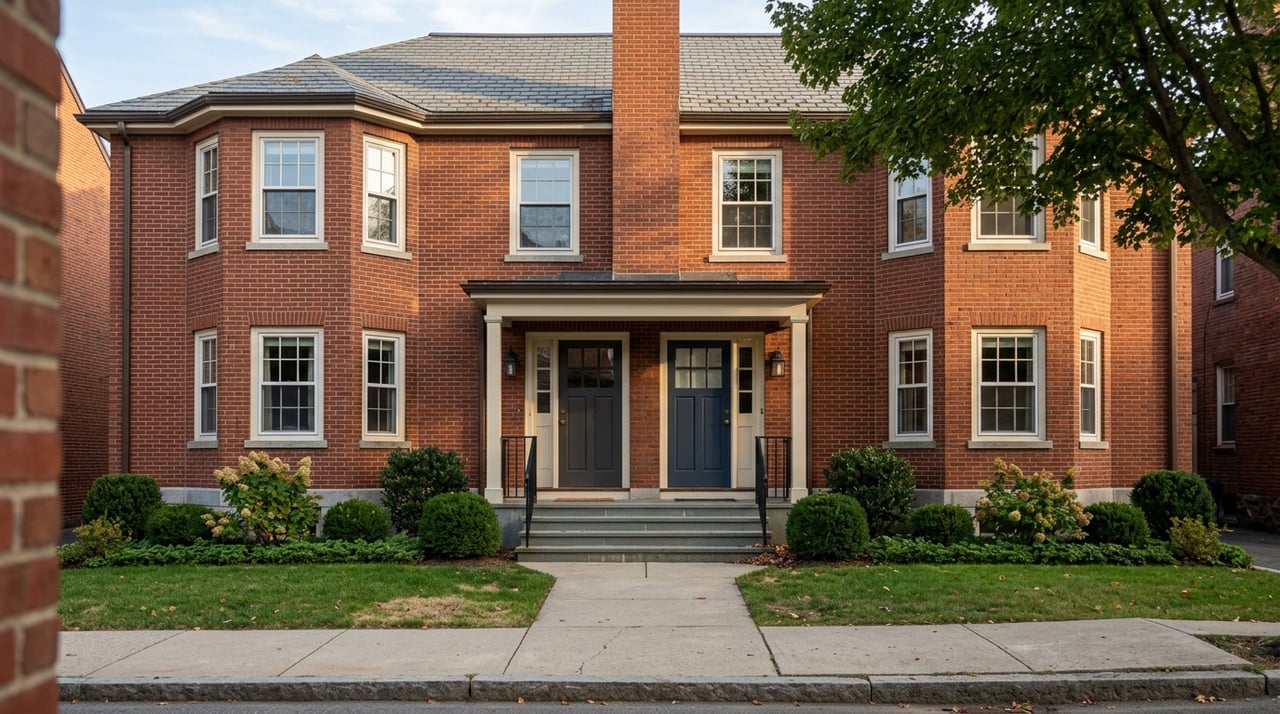
If Stamford’s housing costs make buying feel out of reach, house hacking may sound like the workaround you have been looking for. The idea is simple: live in one part of the property and use rent from another unit to help offset your monthly costs. In a city where home values and rents both run high, that can be appealing, but it only works when the numbers, zoning, and your lifestyle all line up. Let’s dive in.
Why house hacking gets attention in Stamford
Stamford is an expensive market on both sides of the housing equation. Census data shows a median gross rent of $2,276, and the city’s 2025 Consolidated Plan says 59.9% of renter households pay $2,000 or more per month. Zillow reports a typical home value of $704,417 and an average rent of $2,800 as of May 2026.
That combination helps explain why house hacking gets so much interest here. If you can buy a property where part of the home produces rental income, you may be able to reduce your own out-of-pocket housing cost. For some buyers, that can make ownership more realistic in a market that might otherwise feel too expensive.
Stamford is also renter-heavy. Census QuickFacts shows an owner-occupied housing unit rate of 48.8%, which means a large share of households rent. From a house-hacking perspective, that matters because a deep rental pool can support demand when your property offers the right layout, location, and legal setup.
What house hacking looks like in Stamford
In Stamford, house hacking usually works best in one of two formats. The first is a legal 2 to 4 unit property where you live in one unit and rent out the others. The second is a single-family property with a legal accessory dwelling unit, often called an ADU, where you occupy one space and rent the other.
The first path is often more straightforward. Stamford’s housing stock includes 2 to 4 unit properties, but they are not the dominant housing type. The city’s Consolidated Plan says 15.4% of residential properties are 2 to 4 units, compared with 34.2% detached single-family homes and 34.8% buildings with 20 or more units.
That means opportunities exist, but you may need to search carefully. It also means the best house-hack property is not always the most obvious listing. In many cases, layout, legal use, and location matter just as much as price.
Why larger homes may stand out
Stamford’s tenure-by-size data offers an important clue for buyers considering a conversion-style strategy. The city’s Consolidated Plan shows that 69.3% of owner-occupied units have three or more bedrooms, while renter units skew smaller, with 41.7% being studio or one-bedroom or smaller and 40.4% being two-bedroom units.
In plain terms, larger owner homes may offer more flexibility for the kind of layout that could support separate living space, subject to zoning and legal use. That does not mean every larger home is a house-hack candidate. It does mean the physical size of the home may create more possibilities than a smaller property would.
Older housing stock also shapes this conversation. Stamford reports that 49.5% of owner-occupied units were built between 1950 and 1979, and 25.2% were built before 1950. Older homes may offer larger rooms or adaptable layouts, but they can also bring repair needs, maintenance costs, and more inspection issues.
What Stamford zoning allows
Before you get attached to a property, zoning has to come first. Stamford’s zoning code includes one-family, two-family, and multiple-family districts, and what is allowed depends on the property and district.
For example, in the R-6 district, single-family detached and two-family detached dwellings are allowed as of right, while multiple dwellings are prohibited. The minimum lot area is 5,000 square feet for a single-family dwelling and 6,000 square feet for a two-family dwelling.
That is why legal status matters so much in Stamford. A property that looks like it could work for house hacking may not actually be approved for the use you have in mind. You want to confirm what the property legally is today, not just what it could appear to be based on layout.
ADU rules are tighter than many buyers expect
Stamford does allow accessory dwelling units, but the rules are strict. An ADU must be on the same lot as a larger principal dwelling, remain under common ownership, and the owner must live on the premises.
The city only allows ADUs on lots with no more than one single-family dwelling and at least 10,000 square feet. The ADU is capped at 800 square feet and three occupants. Stamford also requires one off-street parking space for the ADU, does not allow additional curb cuts, and prohibits short-term rentals.
There is another major limitation. Multifamily dwellings, including legally nonconforming two- and three-family dwellings, are not eligible for ADUs. If a buyer is deciding between a duplex-style house hack and an ADU route, the duplex or small multifamily path is often simpler because it avoids many of the lot-size and owner-occupancy constraints tied to ADUs.
Why location matters for keeping a unit occupied
House hacking is not only about buying the right property. It is also about buying in a location where renters are likely to value the same convenience that drew you there.
Transit is one of Stamford’s biggest advantages. The city says several CTtransit lines serve Stamford, and the Stamford Transportation Center handles Metro-North, Amtrak, and intercity buses. The station gets more than 8.5 million riders a year and is the second-busiest Metro-North station after Grand Central.
That kind of commuter infrastructure can support rental demand. Stamford also reports that Harbor Point has a free 14-stop trolley loop, which adds another layer of local mobility. For many renters, proximity to train service, bus access, or downtown convenience can make a unit more appealing.
Springdale is another area worth watching from a commuter perspective. The city’s Springdale TOD project focuses on improving access to the station, pedestrian circulation, crossings, sidewalks, bus shelters, and mixed-use development near the station area.
Stamford’s average commute time is 28.5 minutes, according to Census QuickFacts. That helps explain why commute convenience is not just a nice extra here. It can influence how buyers choose a home and how renters choose a unit.
Some submarkets may feel more reachable
Neighborhood price points vary. Zillow’s neighborhood values show Downtown at $358,128, Glenbrook at $468,030, and Springdale at $661,914.
Those figures do not tell you where legal duplexes are located, but they do show how different parts of Stamford can feel more or less approachable depending on your budget. If you are trying to balance purchase price, commute access, and rental appeal, those tradeoffs become part of the decision.
Financing can help, but it is not automatic
One reason buyers look at house hacking is the chance to use rental income to strengthen loan qualification. For owner-occupied 2 to 4 unit properties, projected rent from the other units may help with debt-to-income calculations, subject to lender rules and documentation.
Lenders may require rent documentation, appraisal-based rent estimates, and review of leases or tax returns. In other words, expected rent can help, but it is not something you should assume at full value without lender confirmation.
For one-unit principal residences with an ADU, qualifying standards can be more limited. Fannie Mae says existing ADU rent may be used under specific conditions, and qualifying ADU rent is capped at 30% of total qualifying income.
The key takeaway is simple: if house hacking is central to your plan, talk through the financing early. You want to know how a lender will view the property type, the rent assumptions, and your qualification before you make decisions based on projected income.
The tradeoffs many buyers overlook
House hacking can lower your net housing cost, but it is not passive. You are still buying in a high-cost market, and Stamford’s supply is tight. The city’s Consolidated Plan cites a homeowner vacancy rate of 1.4%, and Zillow says homes are going pending in around 14 days.
That means the search can move quickly. It also means you may have to be patient and disciplined, especially if you are targeting legal 2 to 4 unit inventory or a single-family property that truly fits the ADU rules.
You also need to be comfortable with owner-landlord responsibilities. Even if the math works well on paper, the day-to-day reality includes maintenance, tenant coordination, privacy tradeoffs, and the need for cash reserves when repairs come up.
In Stamford, older housing stock adds another layer. A property may offer strong layout potential, but if deferred maintenance is hiding behind the walls, your rental-income plan can get more expensive fast. A careful inspection and realistic repair budget matter just as much as the projected rent.
So, is house hacking in Stamford right for you?
It may be a strong fit if you want to buy in Stamford, plan to live in the property, and are open to a practical owner-landlord role in exchange for rental income. It can also make sense if you are focused on transit access, want help offsetting Stamford’s high ownership costs, and are willing to be selective about legal use and property condition.
It may be a weaker fit if you want a low-maintenance ownership experience, need a simple single-family purchase with no zoning complexity, or are stretching too far on price while counting on rent that has not been confirmed by your lender. In Stamford, the strategy can work, but it works best when you treat it like both a home purchase and an income property decision.
At Sunbelt, we help buyers look at Stamford from both angles. That means weighing neighborhood fit, commuter convenience, legal property use, and the practical side of multifamily and small investment opportunities. If you are exploring whether house hacking fits your budget and goals, Sunbelt Sales & Development Corp. can help you evaluate the right opportunities with experienced local guidance.
FAQs
What does house hacking mean in Stamford?
- House hacking in Stamford usually means buying a property, living in one part of it, and renting out another unit or legal accessory space to help offset your housing costs.
Are duplexes legal for house hacking in Stamford?
- In Stamford, some zoning districts allow two-family detached dwellings as of right, but legality depends on the specific property, district, lot size, and existing approved use.
Can you add an ADU for house hacking in Stamford?
- Stamford allows ADUs only under specific rules, including owner occupancy, a single-family lot with at least 10,000 square feet, a maximum ADU size of 800 square feet, and no short-term rental use.
Is Stamford a good city for finding renters?
- Stamford has a large renter population, high rents, and strong transit infrastructure, which can support demand for well-located rental space.
Can rental income help you qualify for a Stamford house hack?
- For owner-occupied 2 to 4 unit properties, projected rent from other units may help with qualification, but lenders usually require documentation and do not treat all projected rent the same way.
What is the biggest risk with house hacking in Stamford?
- One of the biggest risks is buying based on optimistic rent or renovation assumptions without fully confirming zoning, legal use, financing treatment, property condition, and repair costs first.
