Trying to choose between living in downtown Stamford or a nearby neighborhood? You are not alone. Your decision likely comes down to walkability, housing type, commute time, and parking. In this guide, you will see how daily life differs in each area, with data-backed tips to help you find your fit. Let’s dive in.
Daily life, side by side
Downtown: walkable and active
If you want to step out your door to restaurants, cafes, and parks, downtown delivers. The Downtown Historic District carries a Walk Score around 91, which signals a “walker’s paradise” where most errands are on foot. You are a short walk to Mill River Park and cultural anchors like the Palace Theatre at the Stamford Center for the Arts, which keeps weeknights and weekends lively. Being close to the Stamford Transportation Center adds day-to-day convenience if you use Metro-North or Amtrak.
- Verify walkability on the official Downtown Historic District page from Walk Score.
- Explore the local arts scene at the Palace Theatre.
Harbor Point: waterfront energy
Just south of downtown, Harbor Point is a newer, waterfront neighborhood built around lifestyle and transit access. It features a long boardwalk, Commons Park, marinas, and frequent events. Harbor Point is also highly walkable for Stamford, with a neighborhood Walk Score near 79, and includes amenities like on-site retail and dining. Residents are minutes from the Stamford Transportation Center, and local shuttles help smooth the last mile.
- See Harbor Point’s walkability profile on Walk Score.
- Get a feel for the waterfront, marinas, and programming through the area’s marina overview.
Shippan, Glenbrook, Springdale, North Stamford: more space, quieter blocks
If you prefer more privacy and room to spread out, Stamford’s neighborhoods offer that. Shippan and Shippan Point have a suburban shoreline setting with primarily single-family homes. Glenbrook and Springdale feature mostly single-family streets with small retail clusters. Walk Scores are more mixed here versus downtown and Harbor Point, which means you will likely rely on a car for some errands:
- Downtown about 91, Harbor Point about 79, Shippan about 74, Glenbrook about 64, Springdale about 50, according to Walk Score’s Stamford pages. These scores help you gauge how often you will walk versus drive for daily needs.
Housing types and price signals
Downtown and Harbor Point: condo and apartment living
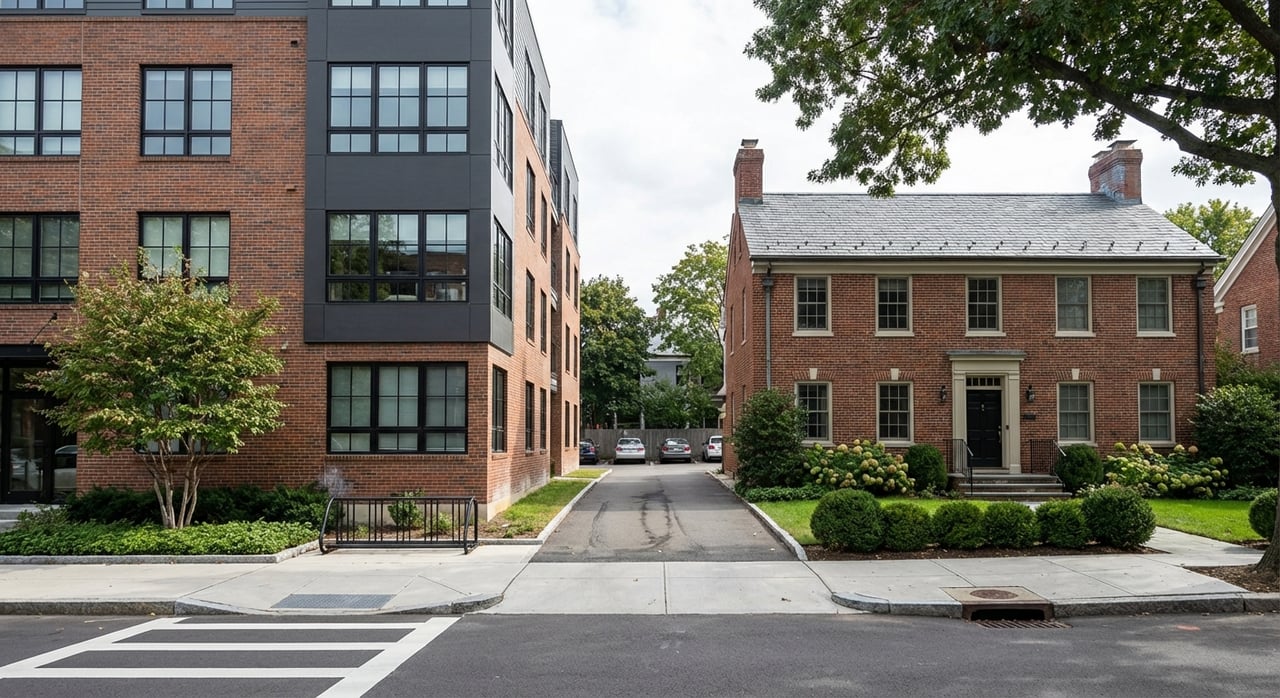
The urban core leans heavily toward condos and apartments, including many mid- and high-rise buildings. Downtown has a higher share of renters than the rest of the city and a concentration of smaller units. This mix often results in lower downtown median sale prices compared with citywide single-family medians because condos tend to sell at lower absolute price points than 3 to 4 bedroom homes.
Shippan, Glenbrook, Springdale, North Stamford: single-family streets
Neighborhoods beyond the core are primarily single-family. Buyers who want a yard, a garage, and a traditional residential block typically look here. Architectural styles vary by area, and you will find a quieter evening street scene compared with downtown. Shippan and Shippan Point offer shoreline settings, while North Stamford stretches to larger lots and a more suburban to semi-rural feel.
What current numbers say
Citywide medians differ by data source and timing, so pair the figure with its source and date:
- Redfin reports a Stamford median sale price around $635,000 (Jan 2026).
- Zillow’s typical home value index shows about $685,000 (mid-2025 snapshot).
- Rocket’s reporting lists a median sold price near $700,000 (June 2025).
These vary because each uses different methods and time windows. Downtown-specific condo medians are often lower than the citywide figure, reflecting unit sizes and the condo mix. When you compare options, focus on the home type you want, not just a single citywide median.
Commute and parking tradeoffs
Train options and ride times
Stamford is a major hub on the Northeast Corridor. The Stamford Transportation Center serves Metro-North’s New Haven Line, Amtrak, and intercity buses, which is a key reason downtown and Harbor Point are so popular with commuters. Many express Metro-North trains reach Grand Central in about 50 to 65 minutes, while local trains can take longer depending on stops. Check current schedules before you travel, since express and local patterns shift by time of day.
- Learn more about the station’s regional role on the Stamford Transportation Center overview.
- For exact times, use the Metro-North schedule and tools on your travel day.
Parking in downtown vs neighborhoods
If you buy a downtown condo, plan for building garage fees or municipal parking. The City of Stamford publishes on-street meter rules, municipal garage rates, and a downtown resident permit program. As of November 1, 2024, permits went virtual, which simplifies renewals and enforcement. In neighborhoods outside the core, you will likely have a driveway or garage at home, but you may need to drive to a station or use a local shuttle for your commute.
- Review rates and rules on the City’s public parking facilities and permits page.
New station garage details
The South State Street Garage by the station opened in February 2024 with about 914 spaces, 92 EV chargers, and 120 bike spaces. Monthly permits began rolling out in early 2025, which is helpful if you need routine commuter parking near the trains.
- See features and permits in local coverage from the Stamford Advocate.
Which lifestyle fits you
- Choose downtown if you want a short walk to the station, arts and dining within a few blocks, and an active street scene. You will trade some space and may pay for monthly parking.
- Choose Harbor Point if you want a waterfront setting, parks, a boardwalk, and a strong restaurant scene while staying close to the station. Amenities often include newer buildings and on-site services.
- Choose Shippan or Shippan Point if you want shoreline access and primarily single-family homes. Expect moderate walkability and more driving for errands.
- Choose Glenbrook or Springdale if you want single-family streets, garages, and village-scale retail. Plan on more driving day to day compared with the core.
- Choose North Stamford if you want larger lots and a quieter, suburban to semi-rural feel. You will drive for most errands and commute connections.
Budgeting your month
If you live downtown
- Monthly building parking or a municipal permit if garage space is not included.
- Occasional per-day parking when hosting visitors or attending events.
- Likely lower gas and car maintenance if you walk to errands and the train.
- Condo fees for amenity buildings, which can cover gyms or concierge services.
If you live in a neighborhood
- Driveway or garage at home with few or no daily parking costs there.
- Possible station parking permit or daily parking for commuters.
- Higher gas and maintenance from more frequent driving to errands.
- Yard care and home maintenance typically higher than condo living.
Quick neighborhood snapshots
Downtown Stamford
- Housing: condos and apartment towers. Very high walkability. Short walk to the station, restaurants, and arts venues. Active day and evening scene.
Harbor Point
- Housing: newer waterfront apartments and condos with on-site retail. High walkability. Boardwalk, Commons Park, and marinas with frequent events. Shuttle options to the station.
Shippan and Shippan Point
- Housing: primarily single-family, shoreline setting. Moderate walkability. Quieter blocks and easy access to coastal recreation.
Glenbrook and Springdale
- Housing: mostly single-family with small retail clusters. Mixed to car-oriented daily routines. Often selected by buyers who value yards and garages.
North Stamford
- Housing: single-family on larger lots. Car dependent. Suburban to semi-rural feel with longer drives to downtown and the station.
Ready to compare homes in person or talk through commute and parking details? Connect with the local team that lives this market every day. Reach out to Sunbelt Sales & Development Corp. to start a tailored search. Schedule a tour. Call or text Juan Carlos today.
FAQs
How does downtown Stamford living compare with neighborhoods for daily errands?
- Downtown and Harbor Point have higher Walk Scores, so many errands are on foot. Shippan, Glenbrook, Springdale, and North Stamford trend more car dependent for groceries, dining, and services.
What is the current median home price in Stamford?
- Reported citywide medians vary by source and date: Redfin about $635,000 (Jan 2026), Zillow’s typical value around $685,000 (mid-2025), and Rocket near $700,000 (June 2025). Methods differ, so compare by home type.
How long is the Metro-North train from Stamford to Grand Central?
- Many express trains take about 50 to 65 minutes, with locals taking longer depending on stops. Check the latest timetable on the Metro-North site before you travel.
Where can I confirm downtown parking rules and permits?
- The City of Stamford posts meter hours, garage rates, and resident permit details on its public parking and facilities page, including information on virtual permits.
What makes Harbor Point different from downtown for commuters?
- Harbor Point offers newer waterfront buildings, parks, and shuttles to the station. Downtown places you closer to the office core, the Palace Theatre, and Mill River Park with a very short walk to trains.
